By Mach on September 4, 2012
 Where: Seaside, CA
When: November 8 – 11, 2012
www.wsn-online.org
The Western Society of Naturalists is a scientific society with a strong focus on ecology, evolution, natural history, and marine biology. Its membership is primarily concentrated on the west coast of North America, though many members have spread far and wide. The main activity of the society is the annual meeting, held in November. This meeting is a great venue to hear exciting new biological research.
Posted in Conferences, MER Updates, Slideshow
By Mach on September 4, 2012
Posted in MER Updates, O'Connor Lab News
By Mach on August 30, 2012
Bernhardt JR and Leslie HM. 2012. Resilience to Climate Change in Coastal Marine Ecosystems. Annual review of marine science. Link
Posted in O'Connor Lab Publications, Publications from MER Labs
By Mach on August 30, 2012
Martone, RM and F Micheli. 2012. Geographic variation in demography of a temperate reef snail: importance of multiple life-history traits. Marine Ecological Progress Series 457:85-99 doi:10.3354/meps09693 Link
Posted in Chan's Lab Publications, Publications from MER Labs
By Mach on August 30, 2012
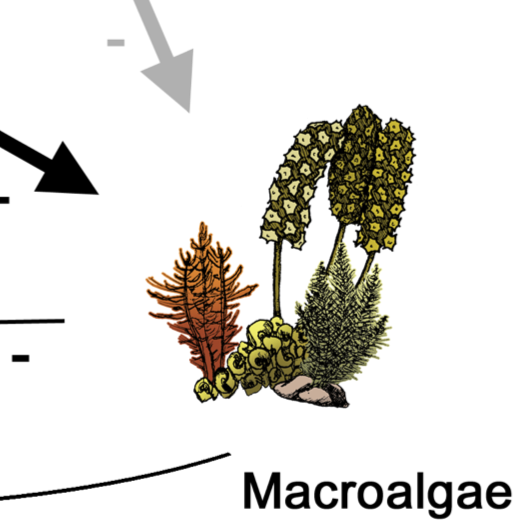
 Harley, CDG, KM Anderson, KW Demes, JP Jorve, RL Kordas, TA Coyle. In Press. Effects of climate change on global seaweed communities. Journal of Phycology. DOI: 10.1111/j.1529-8817.2012.01224.x Link
Posted in Harley Lab Publications, Publications from MER Labs, Slideshow
By Mach on August 30, 2012
Dr. Megan Mach successfully defends her thesis entitled “Research on marine coastal impacts to promote ecosystem-based management: Nonnative species in northeast Pacific estuaries.” Her thesis is now available through the UBC library. Link
Posted in Chan's Lab News, MER Updates, News
By Mach on May 11, 2012
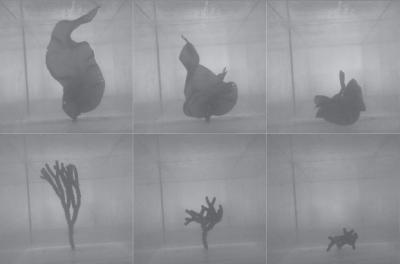
This image shows seaweeds reconfiguring in flow, viewed from downstream. Photo: P Martone
UBC press release from the Martone Lab’s recent publication: Drag reduction in wave-swept macroalgae: Alternative strategies and new predictions
“Seaweeds are important foundational species that are vital both as food and habitat to many aquatic and terrestrial shore organisms. Yet seaweeds that cling to rocky shores are continually at risk of being broken or dislodged from their holds by crashing waves with large hydrodynamic forces. So how do such seaweeds survive in intertidal zones? Do they have special properties that make them extremely flexible or particularly strong?
Patrick Martone (University of British Columbia) has spent a considerable amount of time standing on the shore watching big waves crash against intertidal rocks and wondering how the seaweeds—or anything else—manage to survive there.”
To read more visit UBC Science or read the article:
Patrick T. Martone, Laurie Kost, and Michael Boller. 2012. Drag reduction in wave-swept macroalgae: Alternative strategies and new predictions. American Journal of Botany 99(5): 806-815. DOI: 10.3732/ajb.1100541 (available free here until June 10th, 2012)
Posted in Martone Lab News, News, Slideshow
By Mach on May 5, 2012
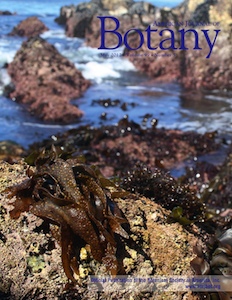 Martone, P.T., Kost, L., and M. Boller. Drag reduction in wave-swept macroalgae: alternative strategies and new predictions. Am. J. Bot. 99(5): 1-10. DOI: 10.3732/ajb.1100541 Link
This work was featured on the journal cover.
Posted in Martone Lab Publications, Publications from MER Labs
By Mach on May 1, 2012
Cathryn Clarke Murray successfully defends her thesis entitled “The role of recreational boating in the introduction and spread of marine invasive species”. Her thesis is now available through the UBC library. Link
Posted in MER Updates, Pakhomov Lab News
By Mach on May 1, 2012
Demes, KW, RL Kordas and JP Jorve. 2012. Ferry wakes increase seaweed richness and abundance in a sheltered rocky intertidal habitat. Hydrobiologia Online First DOI: 10.1007/s10750-012-1082-4 Link
Posted in Harley Lab Publications, Publications from MER Labs
 Where: Seaside, CA